
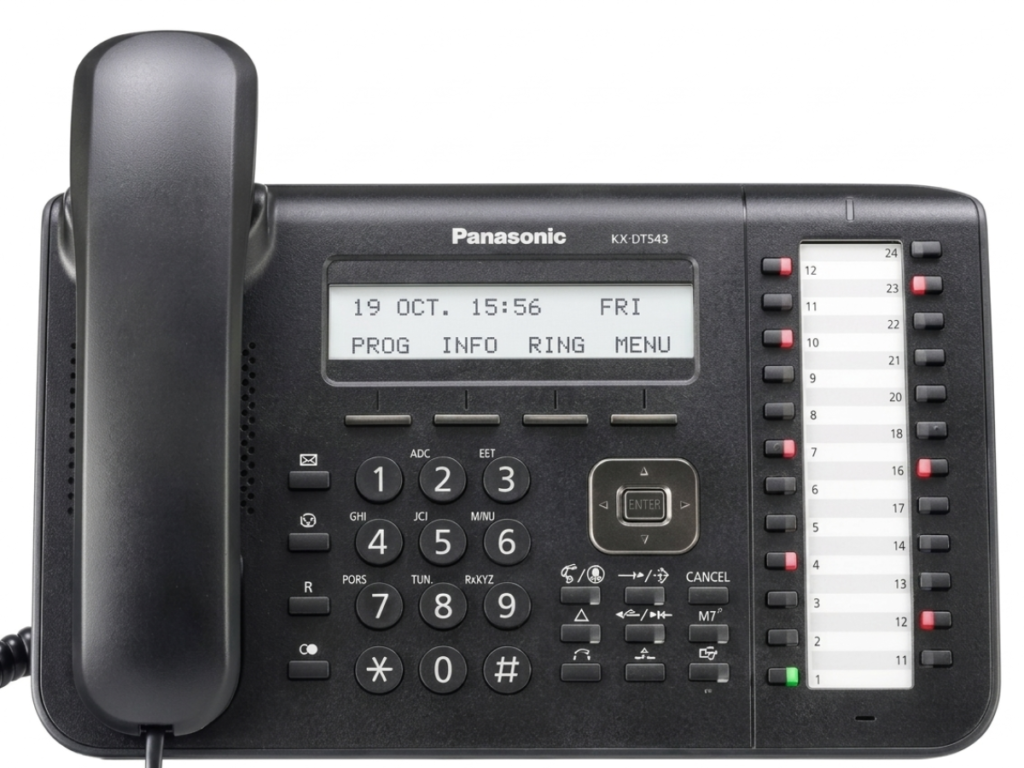
Panasonic Business Phone System for Offices
The Panasonic business phone system remains one of the most recognized solutions in traditional office communication. Many organizations still rely on it for internal calling, structured call routing, and stable on-site connectivity.
This guide from VoicePath Convergence Group explains how it works, its key features, and how it fits into modern business telephone systems, especially for offices that continue to depend on structured internal communication and long-established PBX infrastructure.
What Is a Panasonic Business Phone System?
A Panasonic business phone system is a private branch exchange (PBX) solution designed to manage internal and external communication within an organization. It connects multiple desk phones through a central control unit installed on-site.
These systems are commonly found in offices, warehouses, healthcare facilities, and service-based businesses that require structured call handling.
Common Panasonic PBX models include:
- KX-TDA series
- KX-TDE series
- KX-NS series
Each generation introduced improvements in capacity, flexibility, and network integration while maintaining the core PBX structure.
How the Panasonic Business Phone System Works
The system operates using a central PBX unit that routes calls between internal extensions and external telephone lines.
Here is a simplified flow:
- An external call enters the system through a trunk line
- The PBX receives and routes the call
- Internal extensions are assigned to employees or departments
- Calls are transferred, forwarded, or placed on hold within the system
This structure allows businesses to manage communication efficiently without relying on individual phone lines for each employee.
Key Features of Panasonic Business Phone Systems
The Panasonic business phone system includes several core features that support daily office operations.
1. Extension-Based Communication
Employees can communicate internally using short extension numbers instead of full phone lines.
2. Call Routing and Transfer
Calls can be directed to specific departments or individuals based on predefined rules.
3. Voicemail Integration
Messages can be stored and retrieved within the system, ensuring no missed communication.
4. Multi-Line Handling
Receptionists can manage multiple incoming calls at once.
5. Hardware-Based Reliability
Because the system runs on dedicated hardware, it can operate independently of internet connectivity for internal calls.
Panasonic Business Phone System in Modern Offices
While newer technologies exist, many organizations continue to use Panasonic PBX systems due to their stability and familiarity.
In modern office environments, these systems are often used alongside newer communication tools, forming part of a broader business telephone systems strategy.
Typical use cases include:
- Internal office communication
- Front desk call management
- Department-based routing
- Call-heavy service environments
Advantages of Panasonic Business Phone Systems
Despite being traditional, the Panasonic business phone system still offers practical benefits.
Reliable internal communication
Internal calls remain stable because they do not depend on internet connectivity.
Structured call management
The system allows clear routing rules for departments and teams.
Long-term durability
Many Panasonic systems operate for years with minimal hardware replacement.
Familiar interface
Employees often find the system easy to use due to its consistent design across models.

Limitations in Modern Work Environments
Modern business needs have evolved, and traditional PBX systems face certain limitations.
Limited remote access
Most Panasonic systems were not designed for mobile or remote-first teams.
Hardware dependency
Expanding the system often requires physical upgrades or additional units.
Reduced integration
Compared to newer business telephone systems, integration with cloud tools and apps is limited.
Maintenance requirements
Older systems may require specialized support for repairs or updates.
Panasonic Business Phone System and Modern Communication Tools
Many businesses now operate hybrid communication environments. The Panasonic business phone system can still play a role when combined with newer technologies.
For example:
- Internal calls remain on PBX
- External communication may use internet-based systems
- Call routing can be extended through gateways or adapters
This approach allows businesses to maintain stability while gradually adopting modern communication tools.
Business Telephone Systems Evolution
Business telephone systems have evolved significantly over time. Traditional PBX systems like Panasonic were designed for fixed office environments.
Modern systems now focus on:
- Remote accessibility
- Cloud-based management
- Mobile integration
- Unified communication platforms
Despite this shift, Panasonic systems remain relevant in environments where structured internal communication is the priority.
When Businesses Choose Panasonic Systems
Organizations typically choose or retain Panasonic systems when they:
- Already have existing PBX infrastructure
- Require stable internal communication
- Operate in environments with limited internet dependency
- Prefer on-site control of communication systems
These factors continue to support adoption in specific industries.
Internal System Planning Considerations
When working with a Panasonic business phone system, businesses often evaluate:
- Number of users and extensions required
- Department-based call routing structure
- Hardware capacity of the PBX unit
- Expansion requirements for future growth
- Compatibility with modern communication tools
Proper planning ensures the system continues to meet operational needs effectively.
Frequently Asked Questions
It is used to manage internal and external office communication through a centralized PBX system.
Yes, many businesses still use it for internal communication and structured call handling.
Yes, but expansion depends on hardware capacity and system model limitations.
They are communication systems that allow companies to manage calls across internal teams and external contacts.
Some models support limited integration, but most rely on traditional PBX functionality.
It is suitable for structured environments but may require hybrid solutions for modern communication needs.
Reliable Office Communication
The Panasonic business phone system continues to serve as a reliable communication foundation for many organizations. While modern business telephone systems now offer greater flexibility and cloud integration, Panasonic PBX solutions remain valuable for structured office environments that prioritize stability and internal control.
For businesses planning system upgrades, expansions, or structured communication setups, professional support is essential to ensure efficiency and long-term reliability.
Visit VoicePath Convergence Group or explore vpcgroup.ca to learn more about Panasonic business phone system solutions tailored for modern offices and other business telephone systems requirements.
